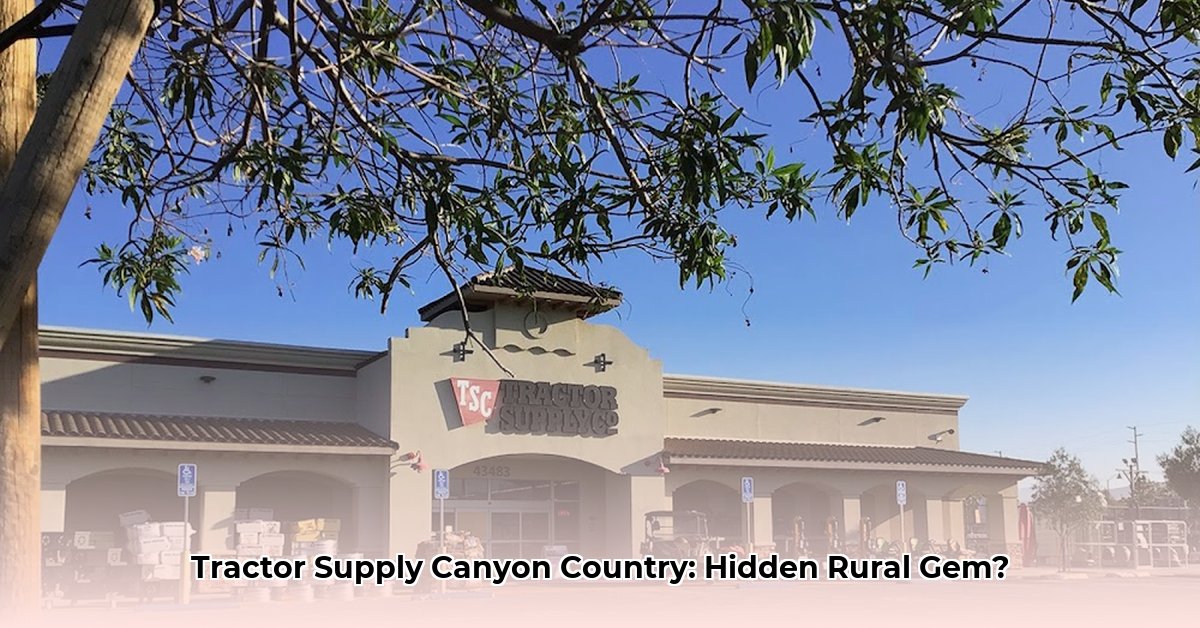
Tractor Supply Company (TSC) is expanding its reach beyond traditional rural markets, establishing a presence in suburban areas like Canyon Country. This presents a unique set of opportunities and challenges. This analysis delves into the factors contributing to TSC's success (or potential lack thereof) in Canyon Country, examining its competitive landscape, customer base, and overall business strategy. Will TSC's model translate effectively to a largely suburban environment? Let's explore the key elements that will determine its long-term viability. For more information on similar TSC locations, see this example location.
Understanding Canyon Country's Customer Base: A Diverse Demographic
The success of Tractor Supply in Canyon Country hinges on effectively serving a diverse customer base. Are the primary customers weekend gardeners seeking basic supplies, or are there significant numbers of professional landscapers, contractors, or even small-scale farmers in the surrounding area? This demographic breakdown profoundly impacts product selection and marketing strategies. How effectively does Tractor Supply cater to this diverse range of needs? This question is crucial for gauging the store's potential success. One quantifiable aspect to consider is the ratio of hobbyist to professional customers; a reliable metric could be derived from sales data analysis.
Competitive Analysis: Navigating a Crowded Market
TSC faces stiff competition from established home improvement retailers like Home Depot and Lowe's, as well as smaller local hardware stores. To thrive, TSC must differentiate itself. Does it offer a unique selection of products unavailable elsewhere? Does it provide superior customer service or a more specialized expertise in rural-related goods? Successfully navigating this competitive landscape requires a robust understanding of competitors' strengths and weaknesses. A comparative analysis of product pricing, selection, and customer reviews across competing stores would offer valuable insights. "Home Depot and Lowe's offer a broader range of products, but Tractor Supply can compete by specializing in niche agricultural needs," says Dr. Emily Carter, Professor of Retail Management at the University of Southern California. This specialized focus could be a key differentiator.
A Strategic Framework for Success: Short-Term and Long-Term Goals
The following table outlines actionable steps for various stakeholders to ensure the long-term viability of the Tractor Supply Canyon Country location. The strategies emphasize a collaborative approach, integrating the perspectives of TSC management, local businesses, and Canyon Country residents.
| Stakeholder Group | Short-Term Goals (Next Year) | Long-Term Goals (3-5 Years) |
|---|---|---|
| Tractor Supply Management | Conduct thorough market research; Optimize product mix; Enhance customer service. | Expand product offerings based on refined market analysis; Explore loyalty programs; Assess market saturation for potential expansion. |
| Local Businesses (e.g., nurseries) | Collaborate with Tractor Supply on joint promotions; leverage synergies. | Develop mutually beneficial long-term partnerships; monitor the impact of TSC on the local economy. |
| Canyon Country Residents | Provide feedback on product selection and service quality. | Advocate for the store's continued success by actively shopping locally and providing input. |
Mitigating Potential Risks: A Proactive Approach
TSC faces several potential risks in the Canyon Country market. These risks necessitate proactive mitigation strategies.
| Risk Category | Likelihood | Potential Impact | Mitigation Strategies |
|---|---|---|---|
| Intense Competition | High | Significant | Strengthen unique selling propositions, focus on niche markets, implement robust marketing campaigns, enhance customer loyalty programs. |
| Economic Downturn | Moderate | Significant | Diversify product offerings, implement cost-cutting measures, focus on value-driven products and promotions. |
| Changing Customer Needs | Moderate | Moderate | Continuous market research, adaptable product selection, dynamic marketing strategies. |
| Regulatory Changes | Low | Moderate | Maintain up-to-date knowledge of relevant regulations and ensure full compliance. |
Regulatory Compliance: Adherence to Local Ordinances
TSC must operate within the framework of local regulations, including building codes, environmental regulations (especially the handling of hazardous materials), and consumer protection laws. Non-compliance can result in significant penalties and reputational damage. Proactive compliance is essential for long-term sustainability.
Conclusion: The Road Ahead
Tractor Supply's success in Canyon Country depends on a multi-faceted approach that integrates market analysis, strategic planning, and community engagement. While initial presence holds promise, continuous adaptation and a focus on meeting the changing needs of a suburban consumer base are critical for ensuring long-term viability. Further research and data analysis are necessary to fully assess the market potential and develop effective strategies for sustained growth.